


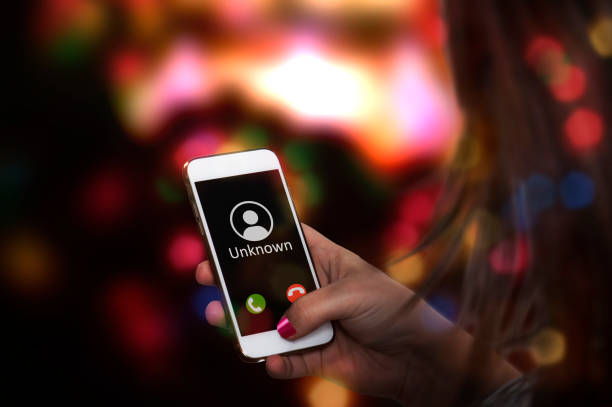
One of the largely used apps on mobile is the caller ID app. It helps you to identify the caller. Although most of your contacts are saved on your mobile phone, and whenever you get a call, the name appears on the screen. However, you keep getting calls from many unknown numbers. Some of them may be friends of your contacts or known to your relatives.
At the same time, the number may belong to a spammer or a television marketer. This is where a caller ID app comes into the picture. Once you know who is calling, you can decide to either take the call or reject it.
What makes this app special?
Since the Covid19 pandemic made people’s lives upside down, many indigenous apps have come to India giving competition to overseas apps. Whether it is Twitter’s desi version Koo or PUBG’s local version Battleground India, they are all busy attracting users’ attention.
The latest app to join the race is the native app called BharatCaller which is making life difficult for more popular caller ID apps in India. Those who developed this app claim that their app is far ahead of Truecaller in many areas and this app is all set to give a better user experience to people than Truecaller. Let’s know more about this app:
Why do we need an Indian app in the first place?
When you receive a call from an unknown number, you wish to know about the caller. Now, this function is performed by a caller ID app. It not only lets you know the name of the caller but also shows their email ids, Facebook ids. This app is especially useful for numbers you have not saved on your phone.
Once you have such an app installed on your phone, even without taking the call, you know whether the call is from a bank, or a credit card operator, or someone else. You also have an option to block spam or fraud calls. People often get calls from property dealers, insurance companies, or stock market agents. If you wish, such numbers can also be blocked.
Features of BharatCaller App
Normally, a caller ID app saves users’ data and call logs on its server. However, Bharatcaller is different as it doesn’t save such data on its server. Therefore, the app does not affect the privacy of the users. Also, none of the employees of this company are allowed to have a database of phone numbers of users. Hence, they do not have access to user’s data. The entire data of this app is kept hidden and no one outside India is allowed to use its server. That makes the Bharatcaller app completely secure, native, and user-friendly.
Moreover, the user has the option of many Indian languages like Tamil, Gujarati, Bangla, and Marathi apart from Hindi and English. Therefore, people are free to use this app in the language of their choice. The best part is the app is available for both Android and iOS users. And if you think about how much it cost you, then you need not worry because it is a free app. So far, the app has been downloaded more than 6000 times.
Who owns Bharatcaller App?
The App was developed by an Indian company called Kickhead Softwares Pvt. Ltd. The founder of this company is Prajwal Sinha who is alumni of IIM Bangalore while the co-founder is Kunal Pasricha. The company that owns this app has got its head office in Noida, Uttar Pradesh.
Why was this app created?
Usually, caller ID apps keep a lot of user’s data in their servers that are mostly located in foreign countries. That is why India badly needed a caller ID app of their own. In last few years, privacy issues and data breach has dominated the world. Every newspaper, TV news channel, and Indian social media platform covered the issue of data leaks.
Popular apps like Facebook, WhatsApp, and Twitter have been in news because of leaks of user’s data. Moreover, scandals like Cambridge Analytica further dented the image of Facebook. Here, data of millions of Facebook users was accessed during the Presidential elections in the US. Even in the Parliamentary elections in India, user’s data from Facebook was taken to know their political orientation.
Due to privacy issues, Truecaller was banned by many government organizations including the Indian Army. They were forced to do it because of the presence of malware in this app. Indian Army could not have taken the risk since any breach of sensitive information could have compromised the security of the country. It also issued a circular telling all its officers and soldiers to uninstall the app from their mobile phones.
The government of India too ran a special campaign to promote native apps. Therefore, in the last year, there has been a flood of homegrown apps like ShareChat, Roposo, Chingari, and Connect app. Moreover, with the Indian app, the entire data remains within the country itself, unlike foreign apps which keep their server in their home country.