


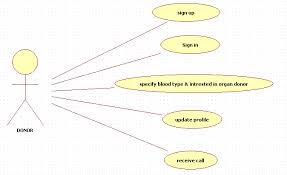
Using an Organ Donation System application to manage organ and blood donation programs is a great way to improve the decision-making process and ensure that organs and blood are properly matched with recipients. It also helps to prevent blood and organ shortages, reduces wastage, and improves the safety and patient experience.
Improved safety of organ recipients, patients, and staff experience
Increasing the safety of organ recipients and the patient and staff experience with Organ Donation System application are important outcomes of health care. However, achieving these outcomes requires continuous improvements to the system’s performance. To this end, it is important to assess the performance of the system and develop strategies to address the system’s weaknesses. In this chapter, we describe the organ donation system in the United States, examine its strengths, and consider opportunities for improving performance.
A key element of the integration of organ donation system application and end-of-life care practices. This integration requires the development of flexible and effective organ recovery systems. It also requires interdisciplinary teams to design these systems.
The system should also provide for a rigorous data reporting process to ensure that data are of the highest quality. These measures should be complemented by strategic planning to ensure that resources are utilized in the most effective way. In addition, research efforts should be culturally relevant and evidence-based.
The organ donation system application should also enhance decision-making and communication with families regarding organ donation. It should also focus on improving training regarding the criteria used in the death determination process. Increasing these efforts will increase the number of deceased organ donors. In the United States, registration for organ donations has increased steadily over the past 20 years. However, it has not kept up with the growing number of transplant recipients.
The system should also provide technical assistance. It is important for transplant centers to maintain the value of their donated organs. It is also important for donor teams to minimize their exposure to potential hazards.
An interdisciplinary team is needed to design effective organ recovery systems. It is also important to identify best practices in end-of-life care and organ procurement. It is also important for the organization to demonstrate competent trustworthiness.
Reduced shortages and wastage of blood
Several system-wide initiatives have been undertaken to improve donation rates. Some countries have developed comprehensive systems to collect and recover organs. In the United States, several policies have been adopted to regulate organ donation. However, more needs to be done to sustain the momentum of organ donation efforts.
A recent Institute of Medicine (IOM) report recommended that organ donation and end-of-life care be integrated to achieve optimal outcomes. An interdisciplinary team needs to be formed to design an effective organ recovery system. They also need to develop end-of-life protocols that align with donation practices.
Another important factor that contributes to the success of donations is trust. Families need to feel confident that they will receive the best care for their loved ones despite the donation decision.
The Organ Procurement and Transplantation Network (OPTN) has developed policies to manage organ allocation. The network also conducts reviews of transplant centers and organ procurement organizations. In addition, it has drafted requirements for organ procurement organizations (OPOs) in relation to tissue bank agreements.
In addition, several quality improvement tools are available to OPOs. These include research efforts, which should be evidence-based. In addition, quality improvement tools can also be used to explore the implications of integrating organ donation and end-of-life care practices.
Another important factor that can help improve donation rates is early notification of staff members to potential donor families. When the decision is made to donate, an OPO must make sure that the potential donor family is not approached by several agencies. In addition, OPOs must demonstrate sensitivity to the families of potential donors.
Improved decision making
Among the challenges facing the organ donation system in the U.S. are issues with clinical systems, allocation, and decision-making. It is imperative to address the underlying causes of a high discard rate of donated organs to sustain the value of these gifts. Fortunately, there are a variety of quality improvement initiatives that OPOs can implement.
One important consideration is whether clinical decision support algorithms are biased. Some algorithms are designed to identify the optimal donation candidate, but the algorithms may also introduce bias. A clinical decision support protocol can reduce the cognitive burden for clinicians.
One of the key challenges to improving the donation rate is finding the optimal model for the donation request process. The best model should be able to address all the factors that contribute to a donation decision. This will require a comprehensive approach, such as improving training on the criteria used to determine a patient’s death and developing early notification of staff.
Fortunately, there are several quality improvement tools OPOs can use to improve donation rates. In addition, the quality of end-of-life care provided to patients awaiting transplantation is a critical factor. Therefore, the most important consideration is ensuring the processes involved in the donation process.
The best organ donation systems integrate all aspects. This includes ensuring patients understand the policies, practices, and procedures used by OPOs. It also involves developing a strategy for the integration of the donation process into quality end-of-life care.
Another quality improvement opportunity is to improve communication and transparency between OPOs and transplant centers. This includes identifying and responding to common questions that patients and families have about the donation process. The resulting improved communication will improve donation rates.
Multiagent system
Developing a multiagent system for an organ donation system is a great way to make sure that you are not overlooking any of the important aspects of the process. It will also help us to make sure that you are doing the right thing in the right way.
A Multiagent System for an organ donation system will allow you to ensure that you have the correct information at the right time and in the right format.
Another important aspect of an e-health system is that you will be able to have two-way communication with both patients and healthcare workers. This is a huge advantage over current manual systems. A multi-agent system for organ donor systems will ensure that your data is kept confidential and secure.
The e-health system will also provide you with the best way to manage your health information. The e-health system will use blockchain technology to ensure that your data is kept secure and that your data is kept in the right format.
Quality improvement efforts should be recognized as part of normal organizational healthcare operations
Several systemwide efforts have focused on improving the donation rate. But how can the Organ Donation System sustain momentum? There are many opportunities for building on existing practices, introducing best practices, and refining the processes for donation requests. In this chapter, we will discuss opportunities for improvement and suggest a strategy for the next steps.
The Organ Procurement and Transplantation Network develops policies for transplantation and organ recovery. It also conducts evaluations of member transplant centers. The CDC reports data on inpatient deaths and can be used as the denominator for transplant rates.
They must also have agreements with at least one tissue bank and one eye bank. These agreements are required by a Medicare reimbursement condition.
There is a growing need to improve organ donation and transplantation rates, and the system needs to be enhanced to make these improvements. It is also important to recognize the need for a continued, systematic quality improvement effort.
In addition, the current systems and processes should be enhanced to improve the communication and decision-making associated with organ donation. This can include improved training on the criteria used in death determinations and enhanced end-of-life communication.
The Organ Donation Breakthrough Collaboratives are working to improve donation and transplantation rates by promoting continuous quality improvement. They have created new practices and policies, and they are also encouraging hospitals and OPOs to engage in ongoing quality improvement efforts.