


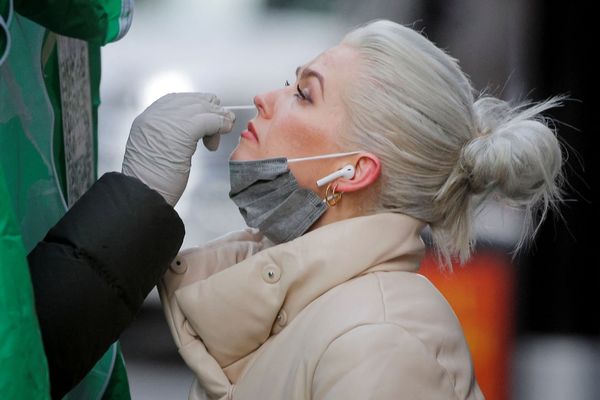
There is increasing evidence that the Northern Hemisphere could experience an increase in COVID-19-related COVID-19 patients this fall/winter. Scientists believe that many COVID-19-related cases may be due to new immune-evasion and behavior changes, as well as declining immunity.
Nature discusses factors that could cause a surge in Omicron vaccines and what countries can do about it.
Is There A Covid-19 Wave This Autumn And Winter?
The Scenario Modeling hub, a collaborative effort, presented several scenarios for the United States in mid-August. The models revealed that the United States could experience a relatively calm COVID-19 season, if booster campaigns are initiated quickly and no new variants are not developed. Even with the new variant, it was unlikely that there would be a significant rise in cases.
Justin Lessler, UNC Chapel Hill, is the modeller. He stated that hospitalizations have been in line with the projections for over a month. There could be other factors that are contributing to the problem. Lessler says boosters, which are intended to attack Omicron and the original SARS virus CoV-2 strain, have taken a while to get out.
Omicron may be creating new immune-dodging species by subtle signs. Lessler stated, “It could lead to some rises in autumn and winter months.” Jennifer Nuzzo (Brown University, Rhode Island), an epidemiologist, says that certain states already experience an increase in cases.
The SARS-CoV-2 Infection survey, which is the gold standard in COVID-19 data for the United Kingdom, showed an increase in COVID-19 case numbers in England and Wales, compared to previous reports. Although it is still quite low, the number of people in Britain with SARS-CoV-2 continues to grow.
Research shows that there are many immune-dodging options available. These options will cause an autumn-winter surge.
Increased Numbers
According to Tom Wenseleers (an evolutionary biologist at Catholic University of Leuven, Belgium), it is extremely unlikely. SARS-CoV-2 is on the rise due to a decline in immunity to previous infections andvaccines. The pandemic has also reached a greater number of people than ever before. Health officials claim that many countries’ social dynamics have almost returned to pre-pandemic levels. This is true even for the United Kingdom. Other respiratory viruses can thrive in cooler months. This could be because of more indoor time.
Are There Any Omicron Strains In Development For This Fall?
These mutations could include more than one. You may see at most three Omicron subvariants driving past waves — Ba.2, Ba.4 and Ba.5, but their descendants are gaining mutations which could allow them to spread.
Tom Peacock is a virologist at Imperial College London. He says that SARS-CoV-2-watchers monitor a remarkable number of variants across many branches of the Omicron family. These variants come from different ancestries but share many of same mutations in the SARS-CoV-2 spike proteins (the virus the immune system targets). Peacock says, “Clearly there is an optimal way for a variation to look going into Season.”
Sublineages are important for researchers. BQ.1’s rapid rise to prominence in Europe and the United Kingdom could have been attributed to key changes made by BA.5 (“a descendant of BA.5)). Rajesh Karyakarte is based in Pune and coordinates SARS/CoV-2 genetic sequencing in Maharashtra. He claims that India’s spawn is performing better than all other spawns because of the BA.2.75 variant, which caused an infection wave a few months back.
In September, his team sequenced samples and found that BA.2.75.2 was the most prevalent subvariant. A relative closely followed it. BA.2.3.20 is another variant of BA.2, which is also growing rapidly in Singapore. It was also discovered in Australia and Denmark.
Wenseleers says that at least one variant of each combination can cause an epidemic. This is because they act in the same way, so it doesn’t really matter which one goes on to become the next big thing.
Why Is This Variant On The Rise?
Two words: immune escape. Multiple variants of spike protein are being studied by researchers. These variants all have multiple overlapping changes to the receptor binding domain. These are the most powerful targets for infected-blocking antibodies. Yunlong Richard Cao, an immunologist from Beijing’s Peking University. Multiple viruses may be producing the same spike mutations, according to him. This is a major advantage for spreading the virus.
Cao and his collaborators evaluated the ability of new varieties to evade vaccine neutralizing antibodies and infect previously with other variants. BQ.1.1, a member the BQ.1 familia was found to have an additional spike and be the most immune-evasive.
They were able evade most of neutralizing antibodies that could be elicited from infection with BA.5. Although they were effective against BA.2 & BA.5, two anti-omicron drugs are not as effective against emerging Omicron subvariants. Peacock was part a team that came to similar conclusions regarding BA.2.75.2. Cao believes there is an amazing degree of immune escape at the moment.
How Big Are The Autumn-Winter Waves In
Based on preliminary estimates, Wenseleers believes that the size of the autumn-winter waves in Australia will be comparable to those in Brazil. This includes the impact on infections rates. It is difficult to predict the impact of hospitalizations on this trend. Research suggests that admissions will decrease due to increased immunity from vaccines and previous infections.
It is not known how low this effect could be. Lessler says that even though it is a different story in 2020 and 2021 there would still be an increase in hospitalizations and deaths.
Hospitals could be affected by even a mild COVID-19 outbreak. They are already facing backlogs, and other conditions that place a significant burden on the winter health care system. Influenza, which was not detected in the Northern Hemisphere during the last two winters is expected to return this year. There are fears that there could be a double influenza epidemic and COVID-19. Lessler says that hospitals can become very stressed during bad flu seasons.
What Are Your Thoughts On The New Vaccines?
Bivalent vaccines, which are boosters, can help protect against new strains of infection. Scientists warn that this protection may not last for long. Scientists believe that bivalent vaccines are based on an Omicron subvariant, BA.1 in Britain and BA.5 in the United States.
There is evidence that vaccines may increase Omicron-specific neutralising antibody production. These antibodies are used to identify the virus that gave rise to the vaccines. Cao suggests that boosters may be required to produce high levels of Omicron-specific neutralising antibody.
All evidence indicates that COVID- 19 vaccinations are very effective in the prevention and treatment of severe diseases. Nuzzo believes this should be the primary goal of all winter/autumn booster programs. This means that booster programs should be targeted at those most at risk for severe diseases such as seniors or people with underlying conditions. She stated, “We must focus a laser beam to protect against severe illness.”