


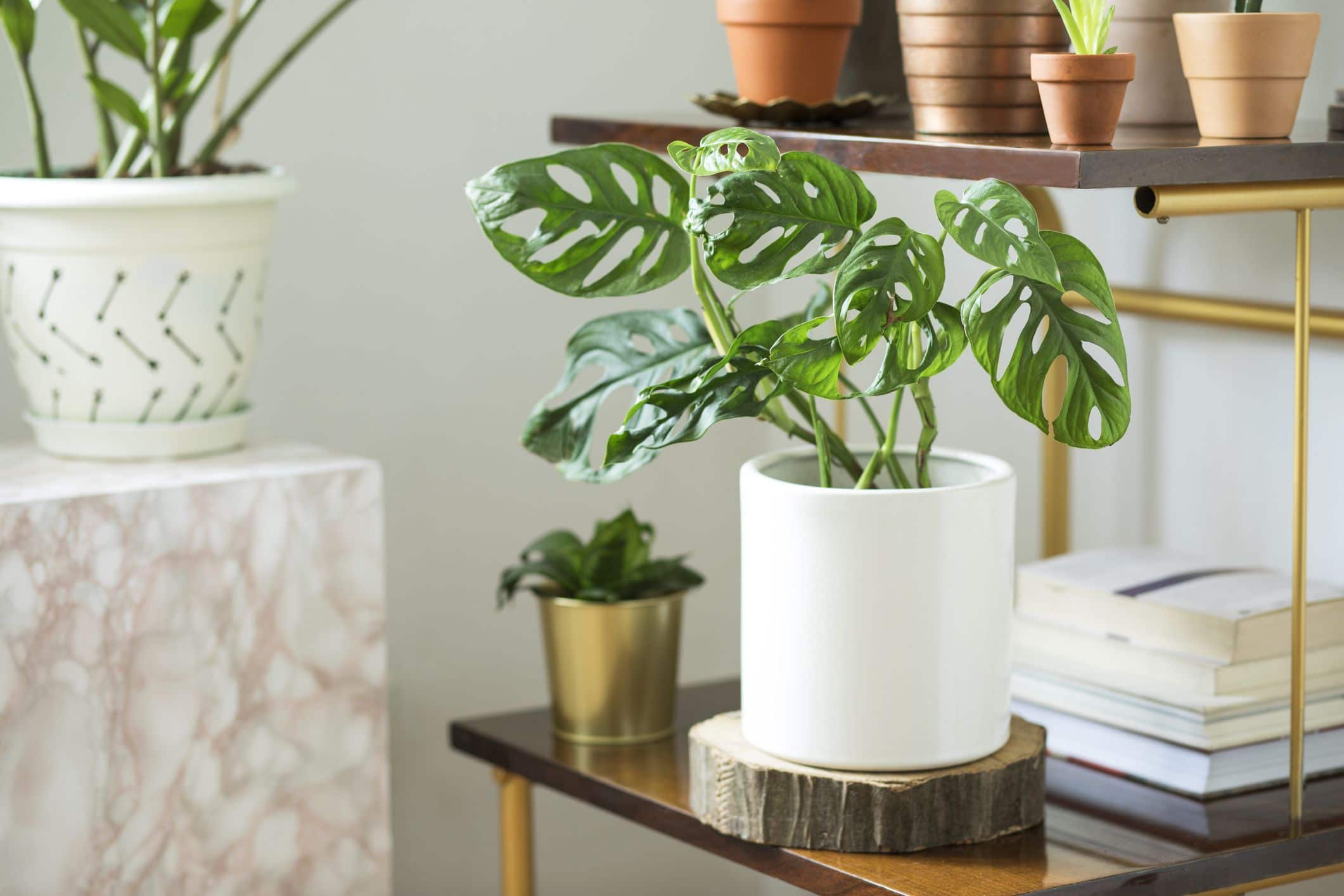
Humans as God’s creatures cannot be separated from their environment. As noble living beings, humans must be able to manage and utilize nature, including plants, correctly and responsibly.
Also in the construction of interior design at home. The statement that humans cannot separate themselves from nature is what makes a good interior design incorporate elements of nature into its design elements.
Not only to show the existence of people who love nature, but because natural elements are needed to make interior design more comfortable and functional.
In the midst of the progress of the times and busy life as it is today, an interior design that is functional, comfortable, creative and practical is needed. This is the reason for the need to know the types of plants that complement interior design.
There are many reasons why interior design complementary plants are so important in this day and age. Because green plants form a comfortable atmosphere and good freshness of mind. Bright colors of flowers can also brighten the atmosphere. Also, plants can produce healthy oxygen.
In fact, several types of plants that complement interior design in the house can neutralize toxins such as formaldehyde, toxins that cause respiratory, nervous, and cancer-causing disorders. In addition, the presence of complementary plants in interior design can be a “focal point” that can beautify the room.
Bird’s Nest Fern (Kadaka)
This fern plant or Pteridophyta is widely distributed in the forests of Indonesia. These types of ferns have different and unique leaves. The leaves are about 25-35 cm long and quite thick.
There are several types of kadaka variants, such as snake kadaka, osaka kadaka, and curly kadaka. The more unique the shape, the higher the selling value.
This plant is not only beautiful, unique and exclusive to Indonesia, but is also suitable to function as a complementary plant for your home interior design. In addition, maintenance is also quite easy.
Sansevieria
Sansevieria ‘Black brazilian’ was chosen as the best interior design complement for your home. Because it produces a lot of oxygen, it is easy to care for, and does not require frequent watering. In addition, the way of reproduction is also easy because Sansevieria produces seeds in the vicinity.
The name Sansevieria is used in honor of Pietro Antonio Sanseverino who succeeded in cultivating this plant. This plant is popular as an ornamental plant because it is easy to care for and grow.
Sansevieria can grow in low or dry conditions and in direct sunlight. Sansevieria is very popular not only because of the uniqueness of its leaves, but also known as the plant that absorbs the most pollution.
This plant contains compounds that can absorb radiation (computers and other electronic devices), carbon dioxide (formaldehyde, xylene, and toluene), cigarette smoke, and 170 other pollutants and convert them into oxygen.
In China, Korea, and Barbados, Sansevieria is said to bring good luck. The shape of the sansevieria leaves with parallel leaf bones underlines the minimalist impression of the interior design.
Palm tree
Palm trees can be used as complementary plants for interior design because of their upright shape and beautiful leaves. This palm tree is also good for absorbing various pollutants.
However, palm tree require a little extra care in their care, as they require regular watering.
Betel Vine
Betel Vine (Golden Photos or Epipremnum aureum) is a unique vine, easy to care for, and reproducible.
This betel Vine leaf is heart-shaped, and has a variety of colors such as dark green or dark green with shades of vine yellow. Betel vine can survive in cold temperatures and little sunlight. The leaves are also able to absorb various pollutants from the air.
This betel vine can be planted in pots, the leaves are small with a diameter of approximately 5-10 cm. However, if planted directly on a large area, the diameter can reach 30 cm. The stems can still grow if soaked in water and can be placed in a tub with a transparent pot.
This betel vine plant is very suitable to be planted in various media, such as in hanging pots or in water. Also, betel vine is also a complementary plant for aesthetic interior design.
Agapanthus
The name Agapanthus comes from the Greek words agape which means love and anthos which means flower. When combined, the agapanthus plant means the flower of love. Agapanthus flowers are mostly clustered and look elegant with a combination of purple and blue.
Agapanthus is propagated by tubers. This plant can tolerate heat and drought, its leaves resemble grass, do not fall off easily, and its beautiful blue flowers are clustered like flower balls.
Its beautiful flower buds can bloom in the dry season and last for several months to shade the heat of the dry season. When planting this flower in a pot, try not to make the diameter of the pot too big, try to be around 20-30 cm. If the pot is too large, the process for flowering will be more difficult.
Aster Flower
Because of their bright and varied colors, daisies are very popular as houseplants and as a complement to interior design. The purple and white colors of daisies can brighten up your kitchen.
Apart from being an ornamental plant, daisy is a natural mosquito repellent because it contains pyrethrin which is often used as a mixture of mosquito coils.
Those are some recommendations for complementary plants for interior design that you can use as a reference. Hopefully by using these recommendations your home will look more attractive and luxurious.
Visit Roma Bangunan – Supermarket Bangunan for more home goods in Indonesia. And if you’re interesting to traveling to makah, please check arofahmina – paket umroh 2022.