


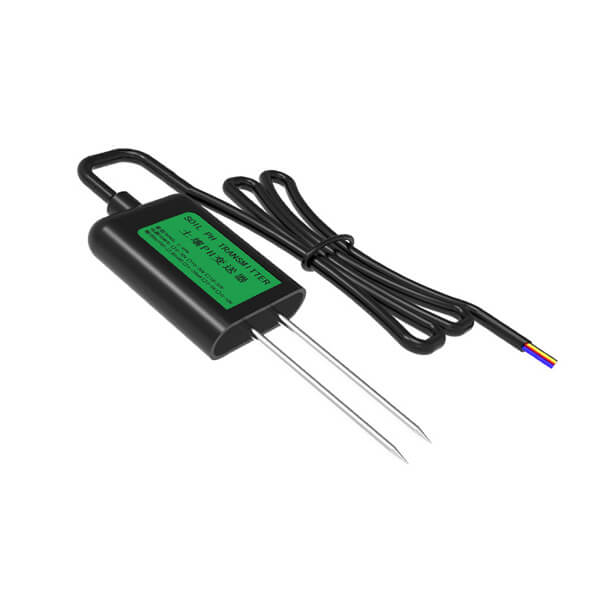
A Soil PH Sensor measures the pH level of soil and is a useful tool for soil quality management. It takes readings every few minutes, and the data can be viewed real-time. A typical soil pH sensor takes about four to five readings per acre. Soil pH sensors take readings in real-time because the electrodes stabilize within a few seconds. One such sensor was developed in the early 1990s by Mark Morgan, then in the Food Science Department at Purdue University. Several other researchers, including Darrel Schulz, Dan Ess, and Dave Mengel, have been involved in the development of this technology.
RS-PH-N01-TR-1
The RS-PH-N01-TR1 Soil PH Sensor is a four-in-one sensor that measures soil PH and moisture. It is designed to be accurate and stable. It is also water-proof and corrosion-resistant. This sensor is designed for agricultural and environmental monitoring.
It is very easy to operate and provides accurate results. It does not require any reagents and has fast response time. It is a perfect tool for soil monitoring. It is also compatible with multiple applications, including agricultural and industrial soil. It also measures soil moisture, nitrogen, phosphorus, potassium, and ammonium. It also has an analog signal output mode.
The RS-PH-N01-TR1 Soil PH Sensor works with any Arduino-compatible microcontroller. It can also be interfaced with a Modbus communication port. To use this sensor with an Arduino-compatible microcontroller, you will need to add the OLED library to the Arduino IDE.
CN0398 temperature sensor
This soil PH temperature sensor has 4 pins that connect to an Arduino. These pins are yellow, blue, black, and brown. The device uses the Modbus communication protocol to connect with an Arduino. The sensor is a slave and has a device address of 0x01. When a command is sent to the sensor, the response frame contains the value of the soil ph.
Soil pH is an important parameter for plants to grow. Strongly acidic soils will cause poor plant growth. They may also lead to issues such as aluminum toxicity or Manganese deficiency. Conversely, strong alkaline soils will encourage a healthy plant growth. With this soil pH sensor, you can easily measure the pH of soil in a variety of soils. The sensor is waterproof, featuring an IP68 protective shell sealed with epoxy resin. This soil pH sensor is an ideal choice for agriculture, environmental monitoring, and animal husbandry.
Response time
A soil pH sensor is a new device that can measure the pH level in soil. It is made of PANI/SU-8 composite films, which are sensitive to soil pH variation. They also have high repeatability and long term stability. Among the advantages of using the soil pH sensor is its low cost.
The response time of a soil pH sensor depends on several factors. First, the range of pH the sensor measures. Then, the sensing element must have good performance to minimize short-term drift. Second, the sensor needs to be calibrated regularly. Finally, the response time should be accurate.
After calibrating the sensor, you can start detecting the pH value in your soil. This is important because pH values are important for different plants. Most plants grow best when the pH level in soil is around 7.0. Soil pH levels that are lower or higher than this are harmful to their growth. In order to avoid these problems, a soil pH sensor can help you keep track of the soil’s pH level.
Calibration
The calibration of soil PH sensors is an important part of monitoring soil pH. A properly calibrated sensor will give accurate readings in soil. To calibrate the soil pH sensor, it is important to wash the sensor thoroughly before use. Then, place it in a clean beaker with a pH buffer. Soak it for 20 minutes. Be sure to avoid using deionised or distilled water as long-term exposure to these solutions can damage the special glass membrane.
To calibrate soil PH sensors, you will need a pH buffer and some buffer solutions. It is important to use sterile buffers and to follow the manufacturer’s instructions. pH buffers should be room temperature or as close as possible to the sample solution. Be sure that the buffer solution is not more than two hours old and does not contain any contaminants.