
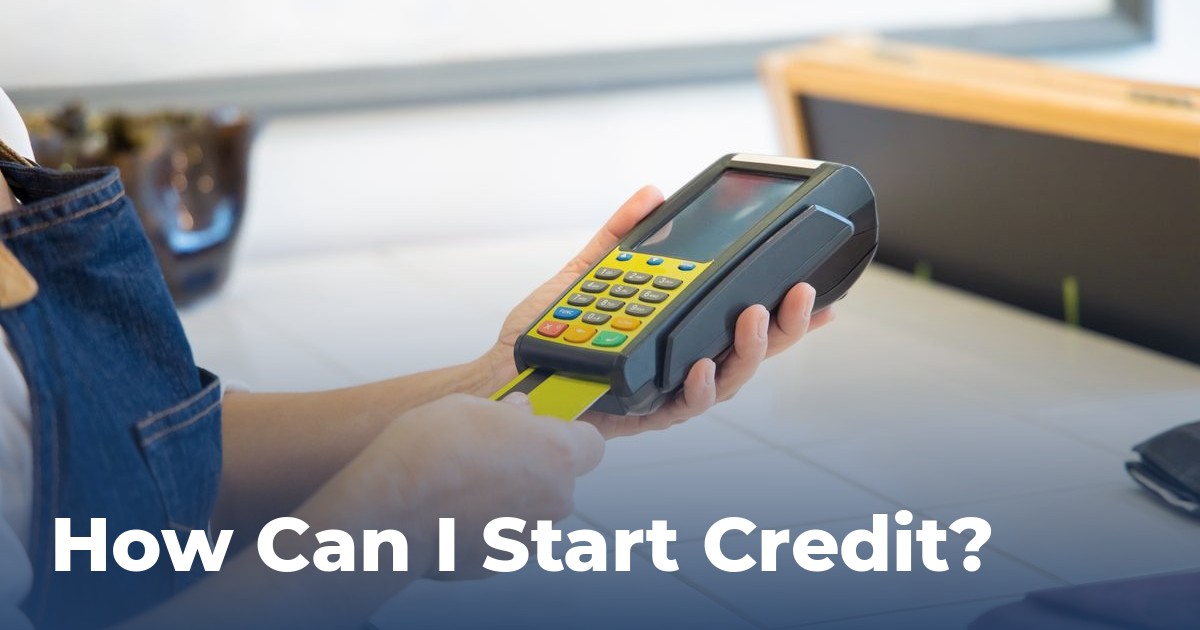
How can I start credit if nobody will give you credit until you already have it? That loop is the first problem most young adults, new arrivals, and anyone who has always paid cash runs into. The Consumer Financial Protection Bureau (CFPB) found in 2015 that 26 million Americans – about one in every ten adults – have no credit history at all with a nationwide credit reporting agency, and another 19 million have records too thin or stale to produce a score (CFPB, 2015). Starting credit means creating a record, one reported payment at a time, and the tools for doing it are simpler than the loop makes it sound.
This article is general educational information only, not personal financial advice. The methods below are the standard routes for building a first credit history in the United States; which one fits you depends on your income, your age, and whether someone you trust can help. Our guide to what a credit score is and why it is important explains the score itself before you start building one.
What Does It Mean to Have No Credit?
Having no credit means the three nationwide credit reporting agencies – Equifax, Experian, and TransUnion – have no file on you, or a file too thin to score. The CFPB calls the first group “credit invisible”: 26 million Americans with no credit record at all, about 11% of adults (CFPB, 2015). The second group, about 19 million people, has a record that cannot be scored, usually because it is too short or too old. Together, nearly one in five adults has no usable credit score.
The problem is worst for the young: the CFPB found that 80% of 18- and 19-year-olds are credit invisible or have unscored records (CFPB, 2015). That is normal at that age, not a failure – you cannot have a history before you have had the chance to build one. The practical consequence is that lenders have no evidence about how you handle borrowed money, so they either decline you or offer you their most cautious terms. Having no credit is not the same as having bad credit, but both make borrowing harder, and both are fixed the same way: by creating a record of on-time payments.
One thing to know upfront: a credit score does not appear overnight. A FICO score generally needs about six months of history on at least one account before it can be calculated (myFICO, 2026). The first six months are about creating the record; the score itself, and the better terms that come with it, follow after that.
Start With a Secured Credit Card
A secured credit card is the most common first step, and it works because the lender takes almost no risk. You put down a refundable deposit – often $200 to $500 – and that deposit becomes your credit limit. You use the card for small purchases, pay the bill on time, and the issuer reports your payments to all three credit bureaus. The deposit is not a fee and it is not spent: it sits as security, and you get it back when the account is closed in good standing or upgraded.
Three things to check before you choose one. First, make sure the issuer reports to all three bureaus – Equifax, Experian, and TransUnion – because a card that reports to only one builds a record at only one. Second, look for a low or zero annual fee, since the point of the card is to build history, not to pay for the privilege. Third, ask whether the card can graduate: many issuers review secured accounts after six to twelve months of on-time payments and upgrade them to an unsecured card, returning the deposit and often raising the limit.
How you use it matters as much as having it. Use it for a small, regular purchase – a tank of fuel, a weekly shop – and pay the statement in full each month if you can. Paying in full avoids interest altogether, which matters when the average APR on credit card accounts assessed interest was 22.32% in 2025 (Federal Reserve, 2025). Keep the balance low relative to the limit: the share of your limit that you use, called utilisation, is 30% of a FICO score, and Experian suggests keeping it below 30% of your limit (myFICO, 2026; Experian, 2026).
Become an Authorised User on Someone Else’s Card
Becoming an authorised user means someone else – usually a parent or a partner – adds you to their credit card account. Their account then appears on your credit report as well, and their payment history counts towards your file. It is one of the fastest ways to start, because you benefit from a history that already exists rather than building one from zero.
The choice of whose card matters enormously. Pick someone with a long, clean record: years of on-time payments, a low balance relative to the limit, and no missed payments. If that person pays late or runs up a large balance, the damage lands on your file too, so this route requires trust in both directions. You do not need the physical card, and you do not need to spend on it at all – the benefit comes from the account appearing on your report, not from using it.
Not every issuer reports authorised users to the bureaus, so check before you rely on it, and confirm after a month or two that the account actually appears on your report. This route is also the usual workaround for the under-21 rule: under the Credit CARD Act of 2009, applicants under 21 generally need a co-signer or proof of independent income to get a card of their own, so being added to a parent’s card is often the first step before that age.
Try a Credit-Builder Loan
A credit-builder loan works backwards from a normal loan. Instead of receiving the money upfront, the lender holds the loan amount – often $300 to $1,000 – in a locked savings account, and you make fixed monthly payments over six to 24 months. Each payment is reported to the credit bureaus, and when the term ends you receive the money, minus any interest and fees. You are, in effect, paying yourself on a schedule, with the lender reporting the discipline.
Credit-builder loans are usually offered by credit unions, community banks, and some online lenders, rather than by the big national banks. The amounts are small and the terms are short, which is the point: the loan is designed to create a payment history, not to fund a purchase. Before you take one, check three things: that the lender reports to all three bureaus, what the total cost in interest and fees will be, and whether there is a fee for paying the loan off early.
This route suits people who would rather not use a card at all, or who want a second type of account on their file alongside a card. Credit scoring models reward a mix of account types – it is 10% of a FICO score – so a card plus a small instalment loan builds a slightly fuller picture than a card alone (myFICO, 2026).
What Makes Your Score Move?
A FICO score is calculated from five categories of information in your credit report, and knowing their weights tells you where to focus. Payment history is 35% – whether you pay on time, every time. Amounts owed is 30% – how much you owe, and how much of your available credit you are using. Length of credit history is 15% – how long your accounts have been open, and how old your oldest account is. New credit is 10% – how many accounts you have opened recently and how many hard inquiries sit on your file. Credit mix is 10% – whether you have more than one type of account (myFICO, 2026).
FICO scores run from 300 to 850, and myFICO groups them into five bands: poor, 300 to 579; fair, 580 to 669; good, 670 to 739; very good, 740 to 799; and exceptional, 800 to 850 (myFICO, 2026). A new file starts with no score at all, and the first score usually lands in the fair range, because the history is short and the oldest account is new. That is expected, not a problem: length of history grows on its own, and the other factors are the ones you can move. Our guide to whether a 740 credit score is good explains what the higher bands open up once you get there.
Two habits move the score fastest. The first is paying on time, without exception, because a single missed payment can sit on a report for years and payment history is the largest factor. The second is keeping utilisation low: a card with a $500 limit and a $450 balance looks very different to a lender than the same card with a $50 balance, even though the limit is identical. Set up automatic payments for at least the minimum, and check the balance before the statement closes if you want the lowest utilisation reported.
Habits That Build Credit – and Mistakes That Undo It
The habits that build credit are unglamorous and repetitive: pay on time, keep balances low, and let time pass. Do not apply for several cards at once – each application usually triggers a hard inquiry, and several in a short period can lower your score and signal to lenders that you are seeking credit urgently. Space applications out, and only apply for a card you actually need.
Check your reports regularly, and check them for free. Every American can pull a full credit report from each of the three bureaus once a week at no cost through AnnualCreditReport.com, the only website authorised by federal law for this purpose, and the bureaus made that weekly access permanent in 2023 (FTC, 2023). Checking your own report never hurts your score. Look for accounts you do not recognise, balances that are wrong, and payments marked late that you made on time – and dispute any error with the bureau that reported it, because an error on a thin file has an outsized effect.
Do not close your oldest card once you have better ones. Length of history is 15% of a FICO score, and closing the oldest account shortens the average age of your accounts. If the card has no annual fee, keep it open with an occasional small purchase. And be careful with buy now, pay later: some providers report to the bureaus and some do not, and a late payment on one that does report can damage a new file quickly. Our guide to buy now, pay later with no credit check explains how those plans interact with your credit.
Frequently Asked Questions
how can i start credit with no credit history
The three standard routes are a secured credit card, becoming an authorised user on someone else’s card, or a credit-builder loan. All three create a record of on-time payments reported to Equifax, Experian, and TransUnion. A secured card is the most common starting point; an authorised-user account is the fastest when a family member has a strong record.
how long does it take to build credit from nothing
A FICO score generally needs about six months of history on at least one account before it can be calculated (myFICO, 2026). After that, steady on-time payments and low utilisation usually move a new score into the fair range within the first year, and into the good range – 670 to 739 – after a year or two of consistent history. There is no shortcut: length of history grows only with time.
can i get a credit card with no credit history
Yes, but not a mainstream unsecured card. Secured cards are designed for exactly this situation: your deposit sets the limit, and on-time payments build the record. Some starter cards also accept applicants with no history. Under-21 applicants generally need a co-signer or proof of independent income under the Credit CARD Act of 2009.
does being an authorised user build credit
Yes, when the issuer reports authorised users to the credit bureaus – most major issuers do. The primary cardholder’s payment history and utilisation then appear on your file. The effect depends entirely on that person’s record: a long, clean history helps a lot, while missed payments or a maxed-out card can hurt you.
how do i check my credit report for free
Go to AnnualCreditReport.com, the only website authorised by federal law to provide free credit reports from Equifax, Experian, and TransUnion. You can pull each bureau’s report once a week at no cost – weekly access was made permanent in 2023 (FTC, 2023). Checking your own report never affects your score.
The Bottom Line
How can I start credit? Open one account that reports to all three bureaus – usually a secured card – use it for a small regular purchase, and pay it in full and on time every month. Add an authorised-user account or a credit-builder loan if you can, keep your utilisation low, and check your free weekly reports at AnnualCreditReport.com for errors. Your first FICO score should appear after about six months, and from there the work is the same every month: pay on time, keep balances low, and let the history grow. Credit is built slowly and lost quickly, so the habits you set in the first year are the ones that will carry the score for years.